After countless archaeological finds, it would be logical to think that the study of numbers comes from ancient civilizations, in which people used rocks and marks to count their goods and carry out trade. However, it was among the European civilizations where the most important contributions to the study of them were recorded.
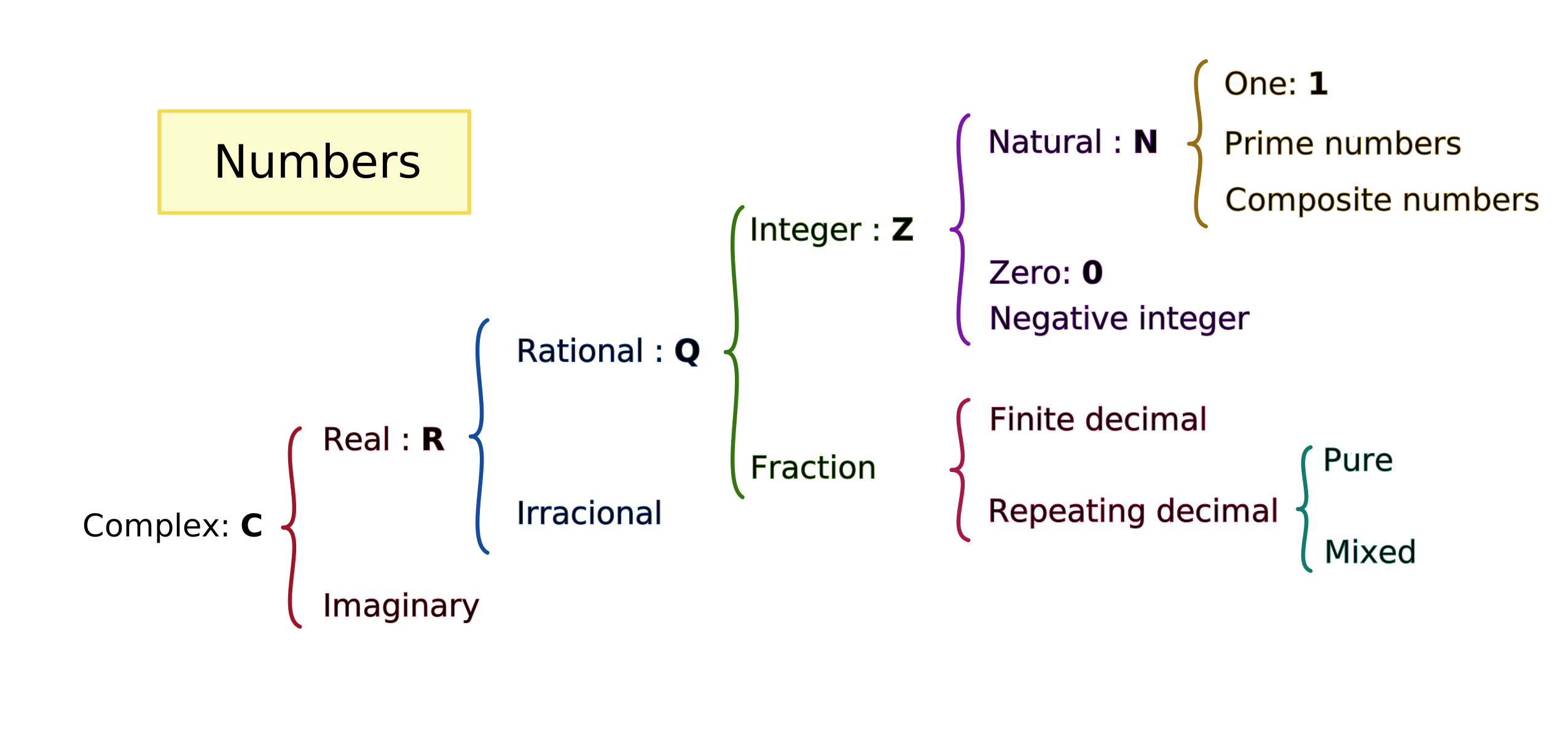
The numbers and the mathematical operations with them led those who studied them to classify them into five fundamental groups (natural, integers, rational, real and complex), these groups in turn nested among themselves, creating a tree-shaped structure that many of us know today.
After the middle of the 20th century and thanks to the development of microelectronics and communications, the capacity to store and process numbers reached surprising levels. It was no longer necessary to use paper or human material to process them, even so the numbers continued to drag problems with irrational numbers, complex numbers, and many other obstacles that still remain to be solved today.

Comments
Comments aren't available yet. They'll arrive once user accounts and notifications are in place — stay tuned.