The current study of cells dates back several centuries, when the first light microscopes appeared, and a naturalist in his observations perceived something similar to a honeycomb, with very small cells attached to each other, which he called cells (cells ).
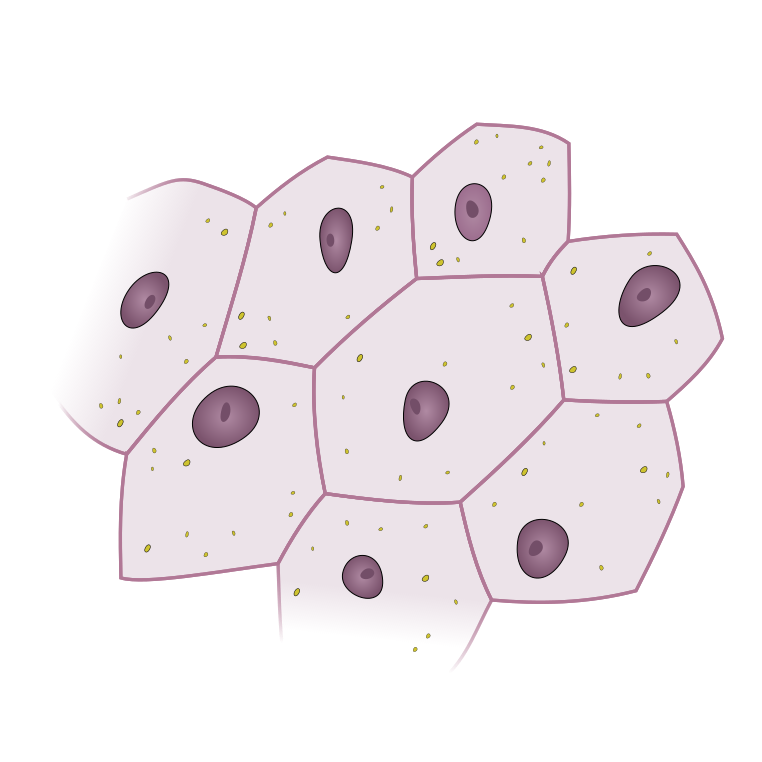
A few years later, cells were discovered that could move freely and did not appear to form cells as in plants, from this point they began to be classified by their bulk and shape. The cells of multicellular living beings such as plants and animals were called eukaryotes (with a nucleus), and those of unicellular living beings such as bacteria were called prokaryotes (without a nucleus).
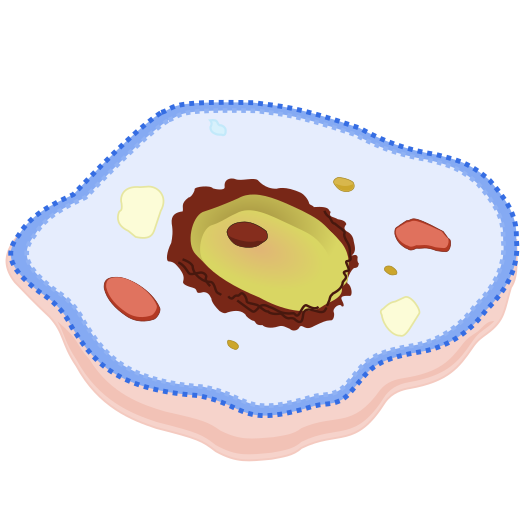

Several centuries later, hand in hand with the evolution of ancient microscopes and the appearance of electron microscopes, it was possible to see an overwhelming number of new shapes in cells that were previously not possible to see. All of this gave rise to a vast universe of new research and hypotheses about cells that still have a long way to go today.
Comments
Comments aren't available yet. They'll arrive once user accounts and notifications are in place — stay tuned.